The Real Deal About Summer Stress
Staying Centered When Everyone Is Home Summer can sound peaceful from the outside

Staying Centered When Everyone Is Home
Summer can sound peaceful from the outside.
More daylight. Fewer school demands. Everybody is home, and the schedule is looser. But inside some homes, summer brings a different kind of stress.
The problem is not only that more people are home. It’s that shared expectations were not set before everyone was home.
Then a conflict happens and attempts to talk about expectations after frustration makes for a hard time. By then, the conversation is not really about the dishes, the curfew, the job search, the attitude, or the car.
It is about feeling unseen and disrespected.
Parents may be wondering, “Do they see what I carry?” Young people may be wondering, “Do they see that I am growing?” Parents want respect. Young people want freedom. Parents want responsibility. Young people want trust.
Both can be true.
And that is where the tension lives.
When Expectations Are Running in the Background
Does this sound familiar?
A parent is thinking:
“You are home now. You should help out more.”
“This is my house, and I expect things to be done a certain way.”
“You are old enough to know better.”
“You cannot just come and go like this house runs by itself.”
At the same time, the young adult may be thinking:
“I have been managing myself while I was away.”
“I can make decisions without reporting every move.”
“I grew up here. Before I left, this was my house too.”
“I want to be respected as someone who is becoming an adult.”
That tension matters.
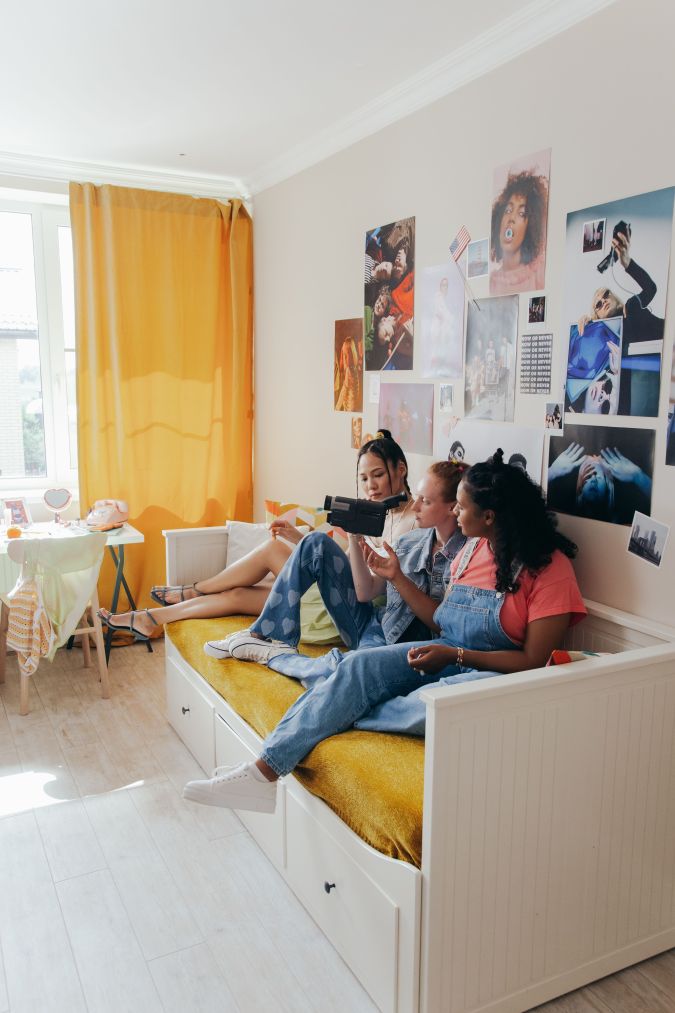
The behaviors we see can look like rebellion, disrespect, laziness, or entitlement. In many cases, something deeper is happening. A young person is practicing autonomy in a home system that has not yet adjusted to their growth.
Parents still protect order, respect, safety, and stability in the home. Young adults are also learning how to return to a family space after having more control over their own rhythm, time, and decisions.
That transition is where we discipline ourselves.
Not because standards do not matter.
Because the relationship is changing, and the standards have to be carried inside that changing relationship.
The Standard Can Be Right
There is truth underneath the words parents say when frustration rises.
“How many times do I have to tell you?”
“You are too old for this.”
“You need to be more responsible.”
Yes. Responsibility matters. Follow-through matters. Respect matters. Household expectations matter.
The issue is not always the standard. The issue is what happens inside us when the standard has not been met.
A parent who is exhausted, worried, embarrassed, resentful, or afraid may be telling the truth, but the truth can come out in a way that escalates instead of guides.
That is why staying centered matters.
Staying centered does not mean you never get upset. It does not mean you ignore disrespect, lower your expectations, or pretend everything is fine.
It means you notice what is happening inside you before your reaction takes over the relationship.
Ask yourself:
What am I feeling right now?
What did I expect that I did not clearly communicate?
What standard actually matters here?
What belongs to my young person to own?
What do I need to say with clarity instead of intensity?
That pause is not weakness. That pause is leadership.

The Rewind Helps Us Stay Connected
One way to practice that leadership is a reset or rewind.
You experience yourself fussing because something in the house has not been done, and your young adult is getting ready to leave. Your voice gets louder. Your frustration takes over. The issue is real, but the delivery becomes bigger than the moment requires.
Then you hear yourself.
You can stop and say, “I want to rewind that. I can say that differently.”
Then you try again.
“The expectation in our home is that your responsibilities are handled before you leave. Those things are not done yet. I feel frustrated when you do not follow through on what you said you would do. The expectation still stands. Once it is done, you can go.”
Notice what changed.
The standard did not disappear. The expectation did not get negotiated away. The parent practiced self-regulation and gave the young person a model for doing the same.
It also gives the young person room to make a decision and experience the outcome of that decision.
The goal is not to have perfect emotions (we strive for excellence, not perfection☺️). The goal is to make it safe to experience strong emotions, correct how we deliver them, and remain connected through the resolution.
Edges Create Ownership
This is where edges matter.
A rule draws a line. It can become “do this or get that.” Sometimes rules are necessary. Safety, health, respect, and the needs of the home still require clarity.
But an edge helps everyone see the standard and what happens beyond it.
An edge says: this is the expectation, this is what is on the other side of the decision, and this is what you are choosing when you move past it.
Edges make natural consequences visible.
That is different from “my way or the highway.”
“My way or the highway” can create compliance, but it can also teach an unintended lesson about power. It can reduce the opportunity for young people to practice negotiation, disagreement, advocacy, conflict, facts over feelings, and learning how to win some and lose some with maturity.
Edges do not remove parental authority.
They make expectations clear enough for young people to own their choices and outcomes.
They also give parents the opportunity to see the growth and transition their young people are making.
You might say:
“I love having you home. We also need to talk about how we share this space.”
“Your time is yours to manage, and this house still has rhythms we all help protect.”
“I am not trying to control your day. I am asking you to communicate your plan.”
“I support your independence, and I also expect you to take ownership of your responsibilities here.”
That kind of language keeps the relationship connected while still making the expectation clear.
It gives your young person something to practice. They practice communicating. They practice planning. They practice hearing how their choices affect other people. They practice being part of a household without being treated like a small child.
That is development.
The Relationship Has Changed
When a young adult returns home after being away, the family is not returning to the exact same relationship.
They have changed.
You have changed.
The household has changed.
That needs to be named.
A parent might say:
“I am proud of how you have been building your own life while you were away. Our household also developed its own rhythm. Now that we are sharing space again, let’s talk about how this works with respect for both.”
That is not an interrogation. That is setting up shared expectations that all parties acknowledge and have the opportunity to follow.
That is a different kind of conversation.
It acknowledges growth. It names the household reality. It keeps the standard in place while making room for the young adult’s voice.
This is how shared expectations are built.
Not a young adult runs the house.
Not they are still a child.
Not giving up parental authority.
By recognizing that the young person is practicing adulthood inside a relationship that still matters deeply.

Summer Stress Can Become a Signal
Strong emotions are not the enemy.
They are information.
Frustration can show us where expectations need to be clearer. Worry can show us where we need to separate fear from fact. Resentment can show us where we have been carrying something that needs to be shared.
The goal is not to avoid emotion.
The goal is to respond with intention.
We do not teach emotional maturity only by explaining it. We teach it by practicing it in real moments.
This is how we love them to life.
Not by pretending everything is easy.
Not by controlling every outcome.
Not by stepping away when they still need guidance.
We love them to life by staying connected, setting edges, regulating ourselves, and helping our young people practice the responsibility and communication they will need beyond our homes.
Summer stress does not have to mean something is wrong.
It can be a signal that the relationship is growing.
A signal to pause.
A signal to clarify.
A signal to reconnect.
A signal to build shared expectations that allow everyone in the home to be seen.
Reflection for This Week
Where are expectations running in the background in your home?
What are you expecting that has not been clearly shared?
What might your young person be expecting that you have not fully heard?
Come back and Share your thoughts, lessons, or questions with us here at Parents Need Love.
Continue the Conversation
PATHworks™ Love Them to Life helps parents strengthen relationships, support growth, and guide teens and young adults without taking over.
Join the Parent Insight Live Waitlist HERE
About Ms Patricia
Patricia Wicks, MSW, is a human development expert specializing in young adults and founder of PATHworks™, with more than 30 years of experience helping young people build the tools needed for a successful transition into adulthood. She partners with families and the organizations that serve them to strengthen relationships, build independence, and improve outcomes through coaching, consulting, training, and facilitation. Learn more at www.pathworksglobal.com.
Research References
Arnett, J. J. (2000). Emerging adulthood: A theory of development from the late teens through the twenties. American Psychologist, 55(5), 469–480.
Gross, J. J. (1998). The emerging field of emotion regulation: An integrative review. Review of General Psychology, 2(3), 271–299.
Search Institute. (2004). 40 Developmental Assets®. Search Institute.


